Friday, June 30, 2017

JULY FLOWER

The July flower is Larkspur.

Native to the North Temperature Zone, Larkspur is a genus of ranunculaceous delphinium plants with bright flowers and spurred calyx and symbolizes feelings of an open heart and ardent attachment.

The term delphinium is believed to come from the Greek word for dolphin as the plant was thought to have a resemblance to the sea mammal.


Folklore reveals a number of names for this flower including lark’s heel, lark’s toe, lark’s claw, knight’s spur and staggerweed.

Traditionally used as a herbal medicine, larkspur was believed to consolidate wounds which is supported by the Latin name for the plant ‘consolida’ which means ‘to consolidate.’

In Greek mythology larkspur sprang up from the blood of Alex after he killed himself following a temper tantrum resulting in an act of dishonour when he did not receive Achilles’ armour. Soldiers were also said to use larkspur in ancient times as a method to control body lice.

Other healing uses that have been connected to the larkspur include the treatment of hemorrhoids, colic in children and wound repair.

Larkspur was also said to have had magical powers as it carries feminine energy. In addition to healing wounds and combating lice, larkspur was used with any spell related to the protection, care and comfort of soldiers and other figures of authority. It has also been known to be used in ceremonies honoring war dead.

Documentation points to larkspur assisting in keeping away ghosts, scorpions and various other poisonous creatures (Cunningham’s Encyclopedia of Magical Herbs) and if planted around a home it would keep away bad spirits. Wearing larkspur also brings these benefits.

It has been used in many protection spells in Europe and one belief is that if bunches of the flower are hung in a stable, it would prevent the animals from being attacked by a predator or from being stolen.

A legend from ancient Rome says men chasing a dolphin enraged Neptune who turned it into the Delphinium protecting it from capture.

Contemporary medicinal uses of the larkspur centre primarily on the treatment of scorpion stings as an antidote. A myth pointed to laying delphiniums in the path of a scorpion as they would basically cause it to stop and freeze until the plant is removed.

The flower is also associated with gaiety, levity and purity of heart.

There are secret meanings to three colors including “Fickleness” (pink), “Joyful, Happy-Go-Lucky” (white) and “You Have Such A Sweet Disposition” (purple).

Larkspur is a popular garden plant, which will grow up to between two and four feet tall. There are approximately forty different species of larkspur with hundreds of additional cultivars that horticulturalists have created.

Larkspur is a poisonous plant which, when ingested, leads to nausea, vomiting, abdominal pain and muscular spasms.

The spur of the flower, which is reminiscent of parts of a lark, created this flower’s name and the town of Larkspur, Colorado was named by the Governor’s wife Elizabeth Hunt in 1871. The abundance of delphiniums (larkspur) growing in the area led to this fitting tribute.



Friday, May 26, 2017

JUNE FLOWER

Image result for rose

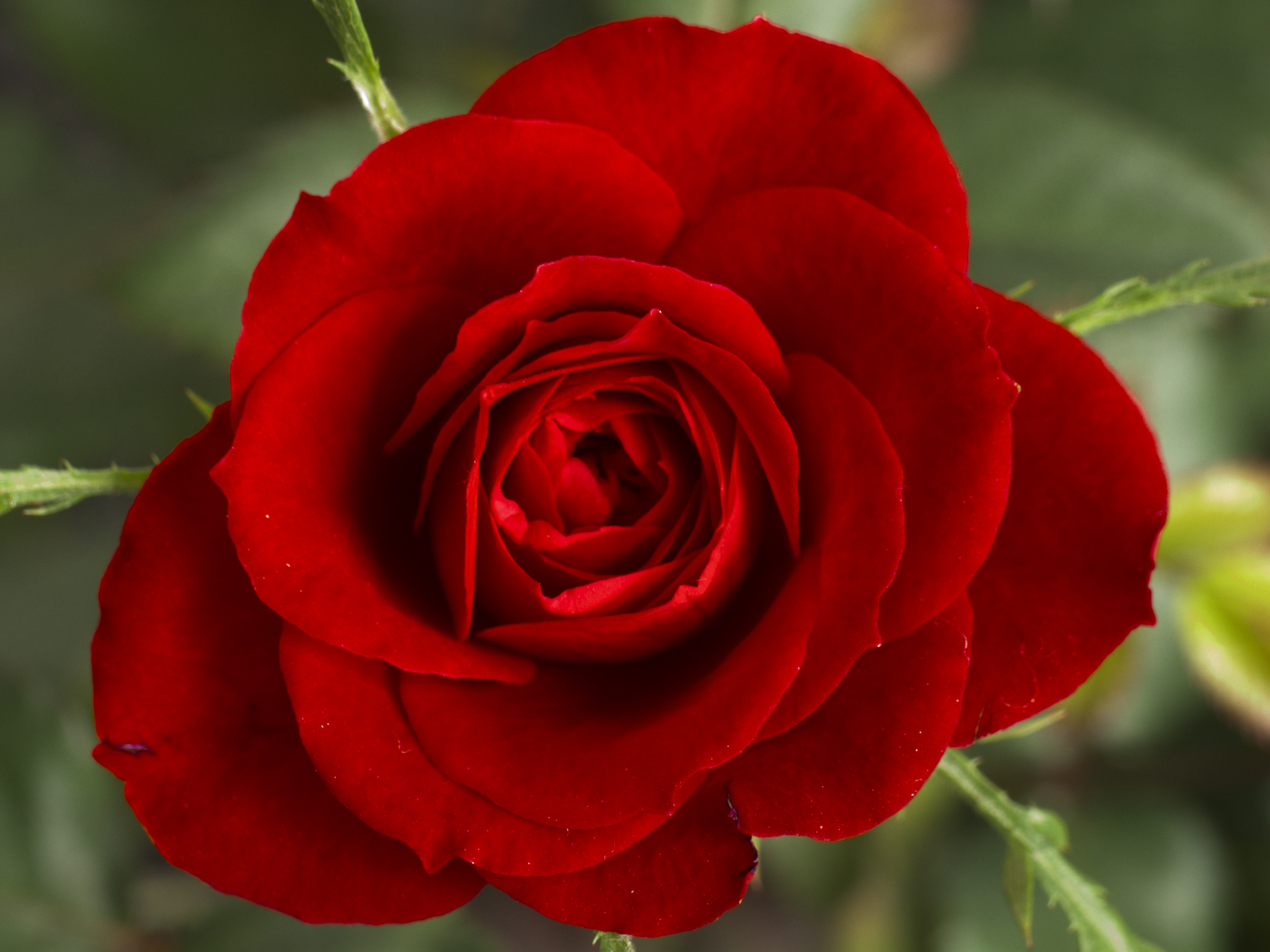
The June flower is the Rose.
This flower and shrub of the Rosa genus are usually found in the Northern Hemisphere and are available in colours ranging from red and pink to white and yellow.
Early civilizations of temperate latitudes were believed to be growing roses as far back as 5,000 years ago. They were also believed to have been grown in ancient Babylon and paintings discovered in Egyptian pyramid tombs from the 14th century BC had paintings with roses depicted in the artwork.
Chinese and Greek gardens dating back to 500 BC were growing roses.
Early roses from these gardens were very likely wild species although there is evidence that selected varieties were also being grown in early gardens. The China rose was believed to have been cultivated as far back as the first millennium AD.
The breeding of roses started in the 17th century in Europe and new species introduction aiding in encouraging more and more cultivation. The China rose was introduced in Europe in the 19th century, which led to an explosion of breeding.
Part of this increase in variety of roses in cultivation has been credited to Empress Josephine of France who supported the practice in her gardens at Malmaison.
Legends involving the rose include one that states Cupid, the son of Venus, shot arrows accidentally into a rose garden when he was stung by a bee. The resulting ‘sting’ from the arrows is what gave the flower its thorns.
The second part of that myth is that when Venus pricked her foot on a thorn while walking in the garden, blood droplets from her wound are what gave the red rose its colour.
A Roman myth tells of the beautiful maiden Rhodanthe who attracted many suitors and in an attempt to hide from them, she went to the temple of her friend Diana. The friend became jealous of the attention directed at Rhodanthe and turned the maiden into a rose and her suitors became thorns.
Roses were also considered a sacred flower in ancient Egypt and were used as offerings to the Goddess Isis. They have also been used in wreaths having been found in Egyptian tombs.
The Imperial Chinese library was apparently filled with books on roses, according to Philosopher Confucius and Hindu legend tells of God Vishnu (protector of the world) and Brahma (creator of the world) settling an argument on what was the most beautiful flower when a rose was presented. It was at that moment both were in agreement that the rose “was supreme.”
The rose was also said to to be associated with the Greek Goddess Aphrodite as she considered it sacred and ancient Sumerians mention roses in tablet writings dating back to 2860 BC.
Latin ‘rosa’ and Greek ‘rhodia’ are the words that led to the naming of the rose.
Hidden messages of roses include “I Love You” (red)“I Am Worthy Of You” (white), “You Are My Secret Love” (orange), “You Are Heavenly” (white), “I Am Not Worthy Of Your Love” (yellow), “We Are Inseparable” (white and red) and “Please Believe Me” (pink

Sunday, May 14, 2017

THE WAY OF THE ROSE

Image result for rose

A soothing, meditative activity is to walk through a rose garden and to appreciate the beauty and the aroma of the flowers.
Clark Strand writes:
Roses have long been sacred to the goddess in Western culture. Roses were sacred to Venus before they were sacred to Mary, and sacred to Isis before Venus. Before Isis, they were sacred to Innana. There is a long history of associating roses with mother goddesses and goddesses of love and fertility.
In pre-Christian culture Roses were a way of honoring the union of body and soul. They celebrated both the material and spiritual dimensions of life and recognized no split between the two. To offer a garland of roses to the goddess ( and the word rosary refers to such a garland) was to unite the cycles of birth ,death, and rebirth that she embodied. To offer roses was to find one’s individual body eternally united with the greater body of the world.
That union is the teaching of the rosary as well. In traditional mysteries (which chronicle the birth, death and resurrection of Jesus), offer a portrait of our physical and spiritual journey through this world- a unified portrait that recognizes the oneness of life and death, body and soul, male and female, heaven and earth ( Strand, 2014 )

Saturday, April 29, 2017

MAY FLOWER


Image result for lily of the valley


By the time the merry month of May finally rolls around, spring flowers are peaking and filling the world with bright colors and sweet scents. One of the most beautiful, delicate and fragrant spring flowers?lily of the valley?is also the official birthday flower of May.
Lilly of the valley is one of the most delicate and beautiful members of the lily family and is also known as May lily, May bells, lily constancy, ladder-to-heaven, muguet (in France), and fairy ladders (in Ireland). Lily of the valley is a low-growing perennial plant that usually has two large oblong leaves and small, bell-shaped flowers that are wonderfully fragrant. In fact, it is the sweet fragrance and dainty white flowers that make lily of the valley wildly popular as wedding flowers.

Lily of the Valley in History

Lily of the valley was native to Europe and distributed to North America and Northern Asia. It prefers shade to sun and grows as a wild flower in England. According to legend, lily of the valley flowers sprouted up from Eve’s tears after she was kicked out of the Garden of Eden.
Similarly, Christian legend tells of Mary’s tears turning to lily of the valley when she cried at the cross. Because of this reference, the flowers were known as Mary’s tears. Lily of the valley is also a symbol of humility in religious paintings and said to signify the second coming of Christ. The name “ladder to heaven” was given to the plant by medieval monks who saw observed the way the flowers grew evenly up the stalk and saw them as symbolic of steps to heaven.
During Roman birthday celebrations family and friends offered congratulations and brought gifts. The gifts included gemstone jewelry, such as the Emerald, and also flowers - the first traditions and origins of the May Birth Flower.

The Meaning of the May Birth Flower, the Lily of the Valley

The meaning of the May Birth Flower, the Lily of the Valley is Sweetness and Humility

The Hidden message of My Birth Flower, the Violet

The hidden message of the Birth Flower, the Lily of the Valley, 
is "You've Made My Life Complete".

Tuesday, February 28, 2017

MARCH FLOWER


The daffodil, also known as Jonquil or Narcissus, is often recognized as a yellow flower but other colour varieties are white and orange. It is a widely cultivated ornamental plant with clustered flowers and a trumpet shaped central crown. This fragrant flower is native to southern Europe.

Romans, who brought daffodils to Britain, believed the sap of the flower had healing powers and it is from Greek mythology that the word narcissus comes from. A nymph named Echo was in love with a young Greek named Narcissus but he ended their relationship. Heartbroken, Echo hid and died in a cave. The handsome, and somewhat egotistical, Narcissus saw his reflection in a pool of water and in an attempt to get a better look, fell in and drowned. The Greek myth says he then became the flower.

Christians have adopted the daffodil as a symbol of Easter as it was believed that the flower first bloomed during the time of Christ’s Resurrection. The legend says it was in the Garden of Gethsemane during the actual time of The Last Supper which symbolized great sorrow and hope for much better things to follow.

In Germany the flower is known as Ostergloken or ‘Easter bells’ and in England they are known as Lent Lillies where Prince Charles receives a single daffodil annually as a tradition. It is considered a rent payment for the unattended lands located in the Isles of Scilly.

The daffodil is also a symbolic flower for Wales while the national emblem is the Leek. In Welsh ‘cenhinen’ is leek and daffodil is ‘cenhinen pedr’ or Peter’s leek. Over time both were confused which is why each have been known as the official flower of that country.

The Druids saw that daffodils symbolized purity and accepted it as their national flower and Persians celebrate Nawruz (New Year’s) with daffodils. It is also a New Year’s decoration in China and Arabians used it as an aphrodisiac.

Daffodil juice was used as a cure for baldness by Medieval Arabs and Egyptians used narcissus as a wreath to hang at funerals.

It was believed that bad luck would occur if a single daffodil was taken into a home and the best way to avoid such misfortune was to give a full bouquet as a present and the household would be filled with good luck.

The word daffodil can be traced back to the 1500’s replacing the original name of ‘affodyle’, which meant ‘that which comes early.’ The word ‘de affodil,’ a Dutch adaptation of the Greek myth of asphodel is where the origin of the flower name is said to come from. The asphodel flower, according to the Greek myth, was associated with death as the flower blossomed over the meadows where the souls of the dead were said to wander.

The word ‘jonquil’ comes from ‘jonquillo’ a Spanish word meaning ‘rush’ as in a description of the leaves of the plant that are ‘rush-like.’


When giving a daffodil, the message being sent is “You Are An Angel.”


Friday, February 3, 2017

FEBRUARY FLOWER

The February flower is Violet.


This is a low, herbaceous plant that comes in various shades of blue, mauve, yellow and cream as well as several species identified as pansies and symbolize faithfulness, humility and chastity.

The violet has appeared in myth, paintings and literature in history.

Folklore tells us that Attis, a dying earth god, mutilated himself under a pine tree and as a result during spring equinox a felled pine tree would be brought to earth mother goddess Cybele. It would be wrapped in wool swaths decorated with violets, as it was believed they appeared from Attis’ blood on the ground.

A similar legend points to violets growing where Greek Ajax killed himself in shame over an act of cowardice. The Greek dramatist Aristophanes used the phrase “violet-crowned city” to describe Athens in one of his plays, and English historian Macauley did the same.

As the flower symbolizes love of truth, or the truth of love, the tomb of Roman tyrant Nero was said to be decorated with violets each spring by someone who had secretly admired or loved him.

In Shakespeare’s Hamlet, violets are used to convey constancy and devotion and appear in lyrics to a song sung in Act IV, Scene 5 that states, “I would give some violets, but they withered all when my father died.”

Violets were apparently used as a food source for the Tartans having been cooked down into a soup. In the Middle Ages, Monks called them the Herb of the Trinity and favoured the violet for its scent. Medieval herbalists believed violets had antiseptic properties and claim they soothed pain and also stopped the growth of malignant tumors. Romans believed they cured spleen disorders and gout.

The word ‘volet’ is believed to originate from the word ‘vias’ which translates to mean ‘wayside.’

Hidden messages of the Violet included “I’ll Always Be True” (violet) and “Let’s Take A Chance” (White/Cream).

In the United States, the violet is a popular symbol with four states adopting it as a state flower. Wisconsin chose the wood violet in 1909 as state flower; Rhode Island selected it in 1897 and adopted that choice in 1968.

Illinois picked the violet as their state flower in 1907 and the ‘common meadow’ violet became the official state flower of New Jersey in 1971.

The flower associated with St. Valentine’s Day has often been identified as the rose, but in actual fact, the violet is connected to the Christian priest who was imprisoned by a Roman emperor. As the legend goes, St. Valentine kept encouraging believers with messages of friendship and love.

He apparently crushed violet blossoms found outside his cell to make ink, which he used to write on leaves with a dove delivering the messages.

American poetess Phoebe Fulkerson Harris documented the tradition of sending postcards and letters on St. Valentine’s Day with violets with her poem “Lines accompanying a bunch of violets sent on St. Valentine’s Day” in 1900.

It is also a well-known practice in New England to decorate a Valentine’s Day gift of a box of chocolates with a bouquet of violets.

JANUARY FLOWER

The January flower is the Carnation.


The carnation, also known by the nickname ‘carn,’ has been cultivated for centuries for its ruffled blooms, favoured for its fragrance and hardiness.

The scientific name Dianthus caryophyllus contains the Greek word ‘dianthus’ which means “flower of the gods,’ and the original pink blooms of the flower led to its common name which is said to mean ‘flesh toned.’

Others believe carnation gets its name from the word ‘coronation’ or the Greek word for ‘flower garlands’ which is ‘corone.’

This Eurasian plant has a spice scent, and is also called the Clove Pink or Gillyflower, and can be found in numerous colours ranging from pink to purple-red and are said the symbolize love, fascination and distinction.

As legend has it, pink carnations were said to have appeared below the Virgin Mary’s tears as Jesus carried the cross and as a result, the pink variety symbolizes a mother’s love.

This connection between the carnation and Mary was immortalized in the 1475 painting “The Madonna with the Carnation” by Leonardo da Vinci. It is housed in Munich, Germany as part of a collection of famous works and is also called the “Munich Madonna.”

Carnations carried the meanings of love, fascination and distinction.

Some of the specific messages attaches to Carnations include “My Heart Aches For you” (red), “I’ll Never Forget You” (pink), “You Have Disappointed me” (yellow) and “I Wish I Could Be With You”. 

Other meanings attached to carnation colours include passionate love (red), rejection or distain (yellow), innocence and steadfastness (white) and whimsical and capricious (purple).